
To maximize storage in a small closet using modular organization systems, we recommend fitting adjustable shelves and hanging rods to your wardrobe, adding drawers for small items, and reserving upper shelves for lightweight seasonal storage. Start with your closet’s measurements and the clothes you plan to keep. Then choose compatible components that fit inside the space while leaving room to open doors and reach your belongings.
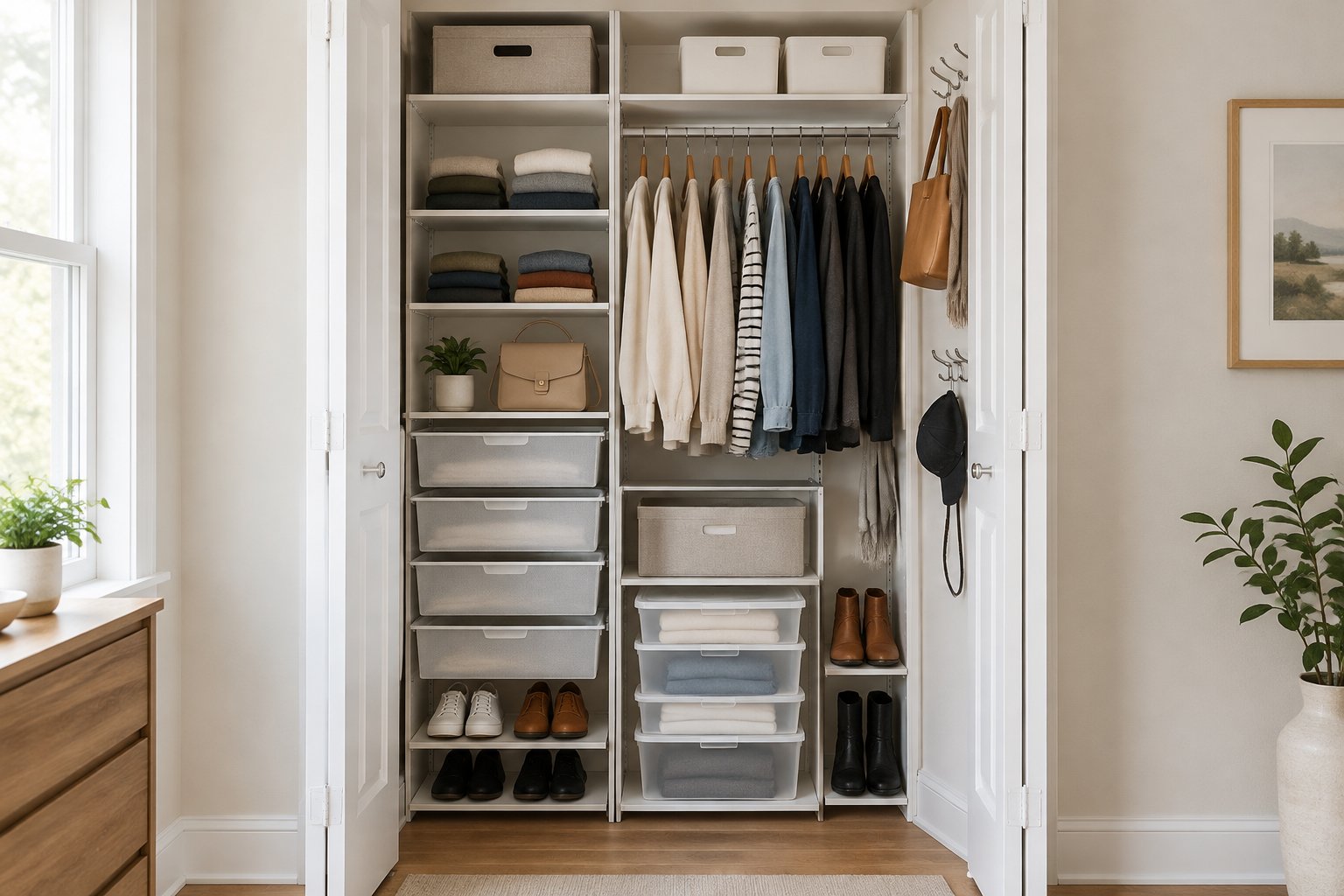
Small closet storage works best when each item has an accessible home. An extra shelf helps only if you can remove its contents, and a drawer needs enough clearance to open fully. Our approach to closet organization puts those everyday movements at the center of the layout.
Measure Your Closet and Sort What Needs to Fit
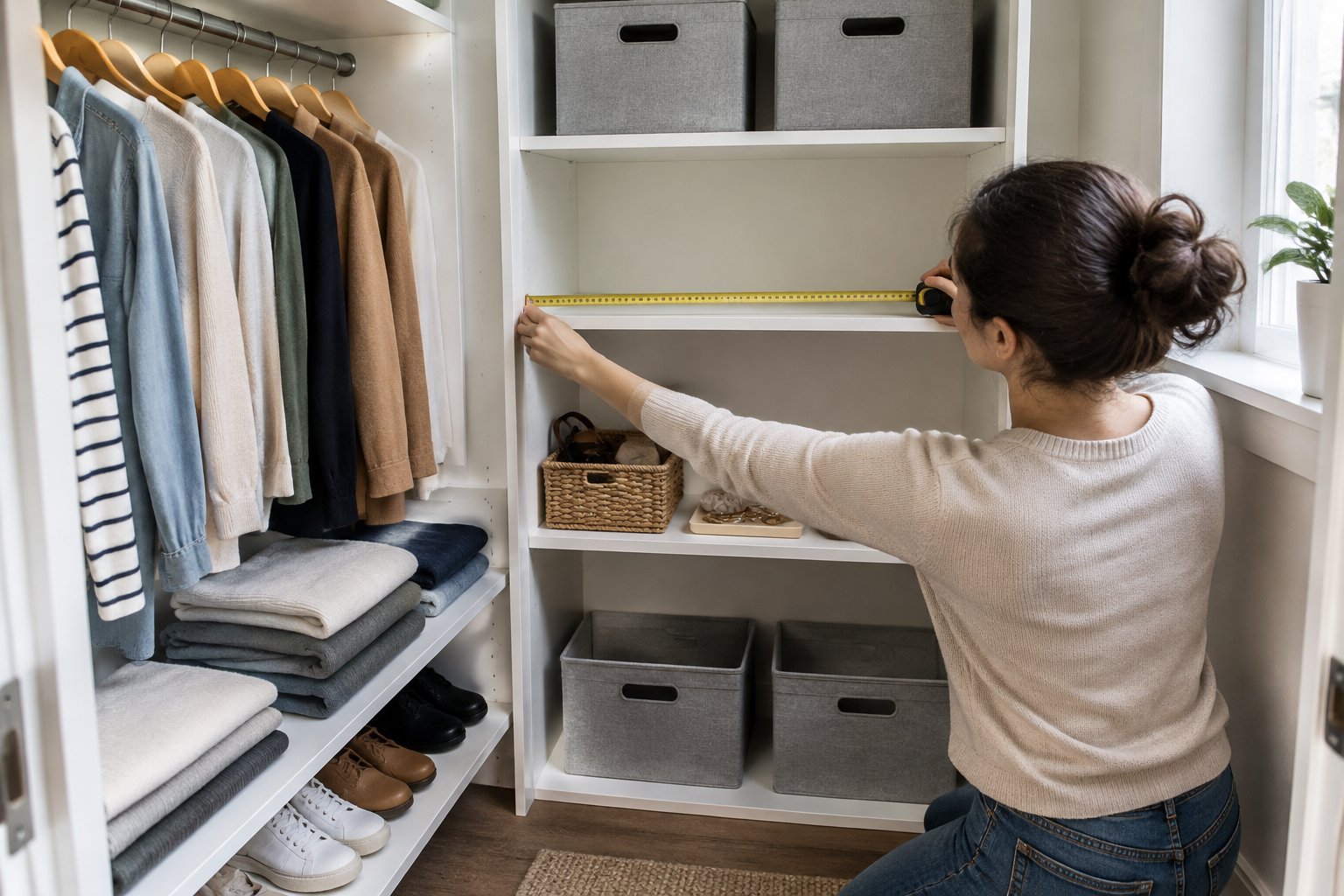
We recommend measuring the usable closet space and sorting your belongings before choosing modules. Empty the closet so you can see the walls, floor, and existing supports. Keep the items you use, separate donations, and identify anything that belongs elsewhere.
Record these details on a sketch:
- Interior width, height, and depth.
- Door opening width and door movement.
- Baseboards and other trim.
- Outlets, switches, vents, and light fixtures.
- Fixed shelves or other features that will stay.
Walls are rarely perfectly square, so measuring the width at the bottom, middle, and top and using the smallest measurement helps prevent fit problems. Follow your chosen system’s required installation clearances when turning those measurements into a shopping plan.
For a reach-in closet, mark areas hidden behind the door frame or sliding doors. In a walk-in closet, record the open floor space needed to stand and move. Count your hanging garments, folded stacks, shoes, and bags separately so each category gets enough space.
Choose a Modular Closet Organizer That Fits Your Space and Budget
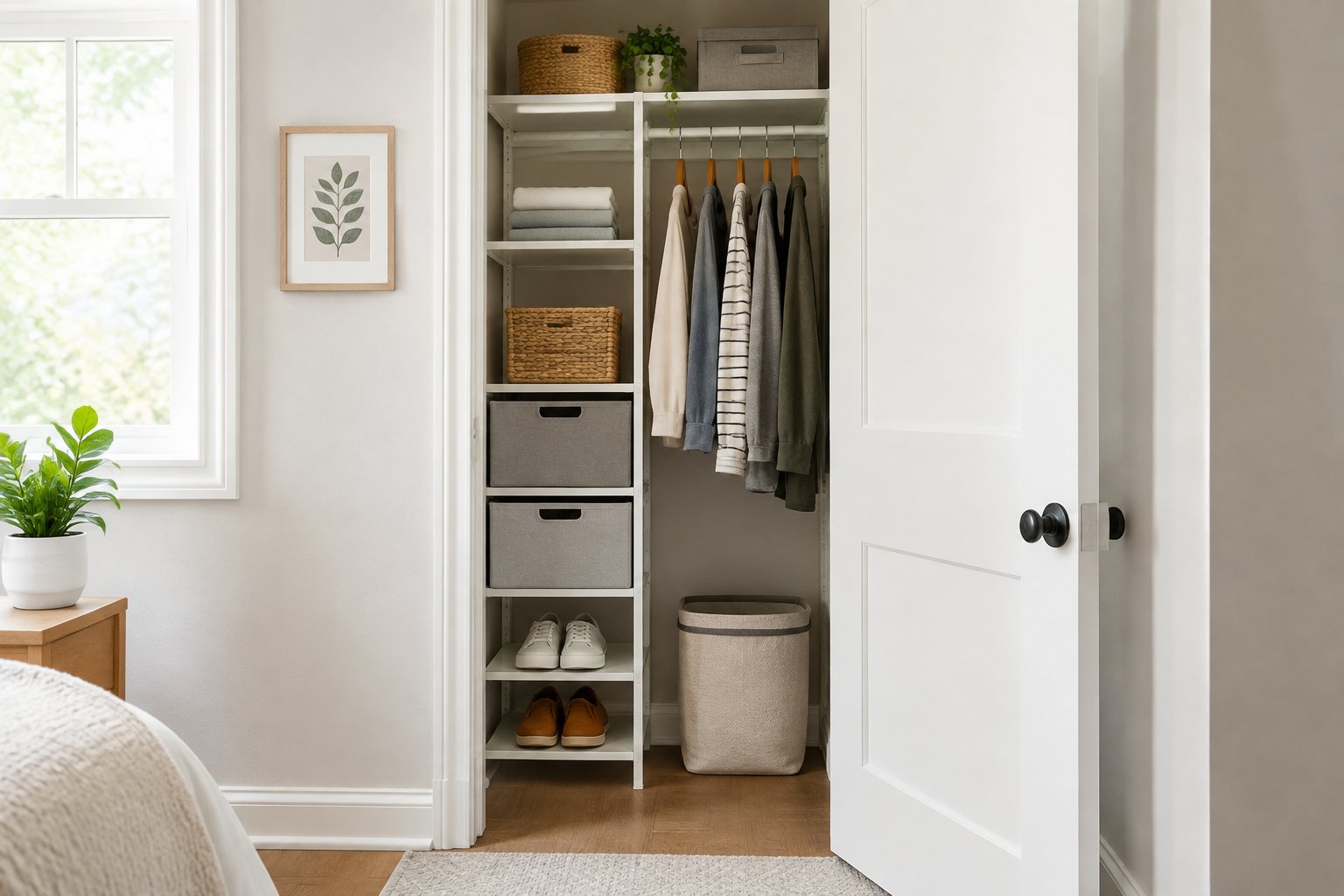
Our recommendation is an adjustable closet organizer with components sized for your measured space and current storage needs. Check the assembled dimensions, required wall attachment, and available accessories before buying. Confirm whether shelves and rods adjust after installation.
Compare the full cost of closet organizers, including shipping, mounting hardware, drawer slides, and installation help. A basic frame with adjustable shelving gives you a useful starting point. Add enclosed drawers where small items need containment.
Choose the structure with installation in mind:
- Wall-mounted systems: Leave floor space open, but require supports suited to the wall construction.
- Floor-supported systems: Transfer weight to the floor and require leveling and any specified wall anchoring.
- Freestanding units: Offer placement flexibility, with anti-tip restraints installed wherever the manufacturer requires them.
Check material details as well. Wire shelves allow airflow but need suitable containers for small objects; solid shelves provide a continuous surface for folded clothes. Keep the finish consistent if you expect to add matching modules later.
Plan Storage Zones Around Your Clothes and Daily Routine
We place frequently used clothing within comfortable reach and assign less-used items to higher storage zones. Build your closet storage plan around how you get dressed and put clean laundry away. Items that take extra effort to put away are more likely to collect outside their assigned space.
Draw each zone onto your measured sketch:
- Short hanging space for shirts and folded-over pants.
- Long hanging space for dresses or coats.
- Shelves for folded knits and bags.
- Drawers for socks, underwear, and small accessories.
- Lower storage for everyday shoes.
- Upper storage for lightweight seasonal items.
Use vertical storage where the contents remain reachable. Keep heavier belongings lower, and leave access to switches and vents.
For a shared closet, give each person clearly defined space. Our preference is separate bays or shelf groups, with shared seasonal storage above. Place daily clothing where each person can reach it without moving someone else’s belongings.
Install the Modular Framework With Secure Supports
We recommend securing the framework exactly as its manufacturer specifies before adding shelves or clothing. Closet organizers carry their own weight and the load of everything stored on them. The wall material and mounting method must support the combined load.
Use this installation order:
- Read the instructions. Identify the required fasteners, support locations, and load limits for your exact system.
- Inspect the mounting area. Locate studs and check for potential wiring or plumbing before drilling.
- Mark a level reference. Position rails or brackets at the planned height.
- Attach the main supports. Use the specified hardware for your wall construction.
- Assemble and level the frame. Check that uprights sit straight and connections are fully seated.
- Install required restraints. Secure floor-standing towers with the manufacturer’s anti-tip hardware.
Use drywall anchors only where the instructions permit them. If the wall construction is unclear or the required supports are unavailable, have a qualified installer assess the location.
Before loading, check each fastener and bracket. Keep the instructions and spare parts together for future adjustments.
Adjust Hanging Rods to Fit Short and Long Garments
Our preferred hanging layout uses stacked rods for short garments and a separate full-height area for longer pieces. Set hanging rods using your clothes on their usual hangers. The longest item in each group should clear the surface below.
Position the upper rod so you can lift hangers off comfortably. Then place the lower rod where the upper garments hang freely above it. Check that clothes on the lower rod also clear the floor or shoe storage.
Reserve long hanging storage for garments that need it. A narrow section suits a wardrobe with only a few dresses or long coats, leaving the remaining width available for other modules.
Tension rods suit lightweight accessory storage when their rated load and mounting surfaces support that use. For a main clothing rail, we favor the system’s supported rod and brackets. Include any center support required for the rod’s span and expected load, and leave enough room to slide hangers apart.
Position Adjustable Shelves and Drawers to Reduce Wasted Space
We space closet shelves around the items they hold, with enough clearance for easy removal. Fold a representative stack of clothing and use it to check shelf spacing before filling the whole unit. Short, stable stacks are easier to maintain than piles that collapse when you pull out a shirt.
For wood closet shelves, follow the allowed span and weight limits. Long, unsupported shelves need the supports specified for their material and construction. Fit a shelf divider where adjacent stacks fall into each other, checking that its attachment suits the shelf thickness.
Place drawers where they open through the available doorway. This deserves special attention behind sliding doors and near projecting trim.
Before fixing the arrangement, check:
- The drawer reaches its full opening position.
- Handles clear doors and nearby modules.
- Clothing stays clear of the drawer’s path.
- Shelf contents lift out without scraping the shelf above.
Our preference is drawers for small loose items and open shelves for belongings you can identify at a glance. Keep bulky knitwear folded to avoid stretching it on hangers.
Add Shoe Storage Without Blocking Access
We recommend placing everyday shoe storage in a visible lower zone that stays clear of doors and hanging clothes. Measure your longest pair and tallest boots before choosing shoe shelves. Check the usable shelf depth, including any front lip.
Flat shelves offer flexibility for mixed footwear. Angled shelves bring shoes into view but need a retaining edge and enough clearance above each pair. Position either style so you can remove shoes without lifting garments out of the way.
Arrange shoes in a single visible row where space allows. Alternating heel-to-toe placement helps some pairs fit closer together; check the fit with your own footwear before setting shelf spacing.
Keep damp or dirty shoes out of enclosed storage until they are clean and dry. If footwear takes space needed for daily clothing, move occasional pairs to another suitable storage area. Our priority is keeping the closet entrance and drawer paths open.
Use Doors and Side Walls for Lightweight Accessories
Our recommendation is to use clear door and side-wall areas for lightweight accessories after the main modules are in place. Over-the-door hooks and shallow pocket organizers suit belts, scarves, and small fabric items. Their position should leave the door free to close.
Check the gap above the door before buying an over-door bracket. Test the loaded organizer through the door’s full movement, including its clearance from shelves and clothes. Sliding and bifold doors require particular care because attached storage affects their movement.
On side walls, position hooks where accessories stay clear of hanger ends. Use fasteners suited to the wall and the intended load.
Keep this hanging storage shallow enough to preserve access to the main closet. We suggest removing empty bags from other bags before deciding how many hooks you need; nesting suitable bags reduces the amount of wall space they occupy.
Fit Storage Bins to Upper Shelves and Seasonal Items
We reserve upper shelves for lightweight storage bins containing items used infrequently. Measure the shelf opening and the path needed to lift a bin out. Include the lid and handles when checking its outside dimensions.
Choose rectangular bins that fit the shelf depth without overhanging. Leave hand space around them and enough room above to remove the lid or lift out the entire container.
Match the container to its use:
- Open bins for accessories you reach for regularly.
- Lidded bins for clean seasonal clothing.
- Clear containers when visible contents help identification.
- Fabric bins for lightweight items on suitable shelves.
Label the front with a specific category, such as “winter scarves” or “summer swimwear.” Among small closet storage ideas, this is a practical way to keep less-used belongings identifiable.
Our safety rule is to keep heavy bins low. Use a stable step stool for upper storage, and avoid placing anything on top of a bin that must be removed regularly.
Test the Layout and Readjust Modules as Your Needs Change
We recommend testing the loaded closet through your normal routine before treating the layout as finished. Put away a full load of clean laundry, choose an outfit, and return shoes to their assigned shelf. These tasks reveal access problems that an empty system hides.
Check each problem at its location:
- If stacks tip over, lower the shelf spacing or add a compatible divider.
- If garments drag, adjust the rod or clear the area beneath them.
- If a drawer catches, check its alignment and door clearance.
- If a category overflows, compare its allocated space with the amount you keep.
Change the affected module, then repeat the task. Empty it before moving supports or hardware.
Some adjustable systems use closely spaced mounting holes; Closet Factory’s rods and shelves move in 1¼-inch increments. Check your own system’s adjustment range when planning changes. Our closet organization recommendation is to keep a photo of the working arrangement and record component sizes for future closet storage additions.
Keep Your Closet Flexible and Easy to Use
Our approach to small closet storage combines a secure framework with modules fitted to the clothes you own. Accurate measurements establish the limits, while accessible shelves and rods make daily use easier. A closet organizer earns its space when belongings are easy to take out and return.
Keep a little room within each category for clean laundry and seasonal changes. When access becomes difficult, adjust the affected shelf or rod and check the fit with its actual contents.
Frequently Asked Questions
We use the same fit and safety checks when adapting modular storage to rental rules or existing components. These details help narrow the small closet storage ideas suitable for your space.
Are modular closet organizers suitable for renters?
We recommend renters check their lease and get permission for required wall attachments before buying closet organizers. A removable system still needs any anchoring specified by its manufacturer, so confirm both installation and move-out repair requirements.
Can you combine modules from different brands?
We recommend combining parts only when their manufacturers confirm compatibility. Matching widths alone does not establish that brackets, mounting holes, or drawer hardware will work together safely.
How should you light a dark reach-in closet?
Choose a closet fixture that illuminates shelves and hanging clothes without your body blocking the light. Follow the fixture’s clearance requirements, and hire a qualified electrician for hardwired installation.
Ashley Wells

Your trusted source for product reviews, decor inspiration, and expert tips. Ashley Wells helps you make informed choices and elevate your lifestyle. Discover the best products and decor solutions for your home. Follow Ashley Wells for the latest reviews and trends. Create your ultimate living spaces with her.