We recommend descaling an espresso machine with vinegar only when the manufacturer approves it for your exact model. Use the specified dilution, complete the approved cycle, and thoroughly rinse the water circuits. If the manual requires a dedicated descaler, use that product and follow its instructions.
Vinegar’s acid dissolves mineral scale, but its suitability depends on the materials inside your machine. Cleaning an espresso machine with vinegar also requires separate methods for coffee oils and milk residue. Our first precaution is to keep those maintenance tasks separate.
Can Your Espresso Machine Safely Use Vinegar?
Your espresso machine is suitable for vinegar descaling only if its manufacturer explicitly permits that method. If the manual is silent, contact support before adding vinegar to the reservoir.
Acetic acid reacts with mineral deposits, but compatibility with internal metals and rubber seals depends on concentration, temperature, and contact time. A manual or semi-automatic design alone does not establish that vinegar is safe.
Before starting, check the following:
- Exact model: Match the manual to the model number on your machine.
- Approved chemical: Look for explicit permission to use white vinegar.
- Complete procedure: Confirm the dilution, cycle sequence, and rinse requirements.
- Service restrictions: Check whether descaling requires a technician.
An automatic espresso machine needs its own instructions, even when its controls resemble another model’s. Cleaning advice for drip coffee makers does not establish a safe procedure for pressurized espresso equipment.
Step 1: Gather Supplies and Prepare the Machine
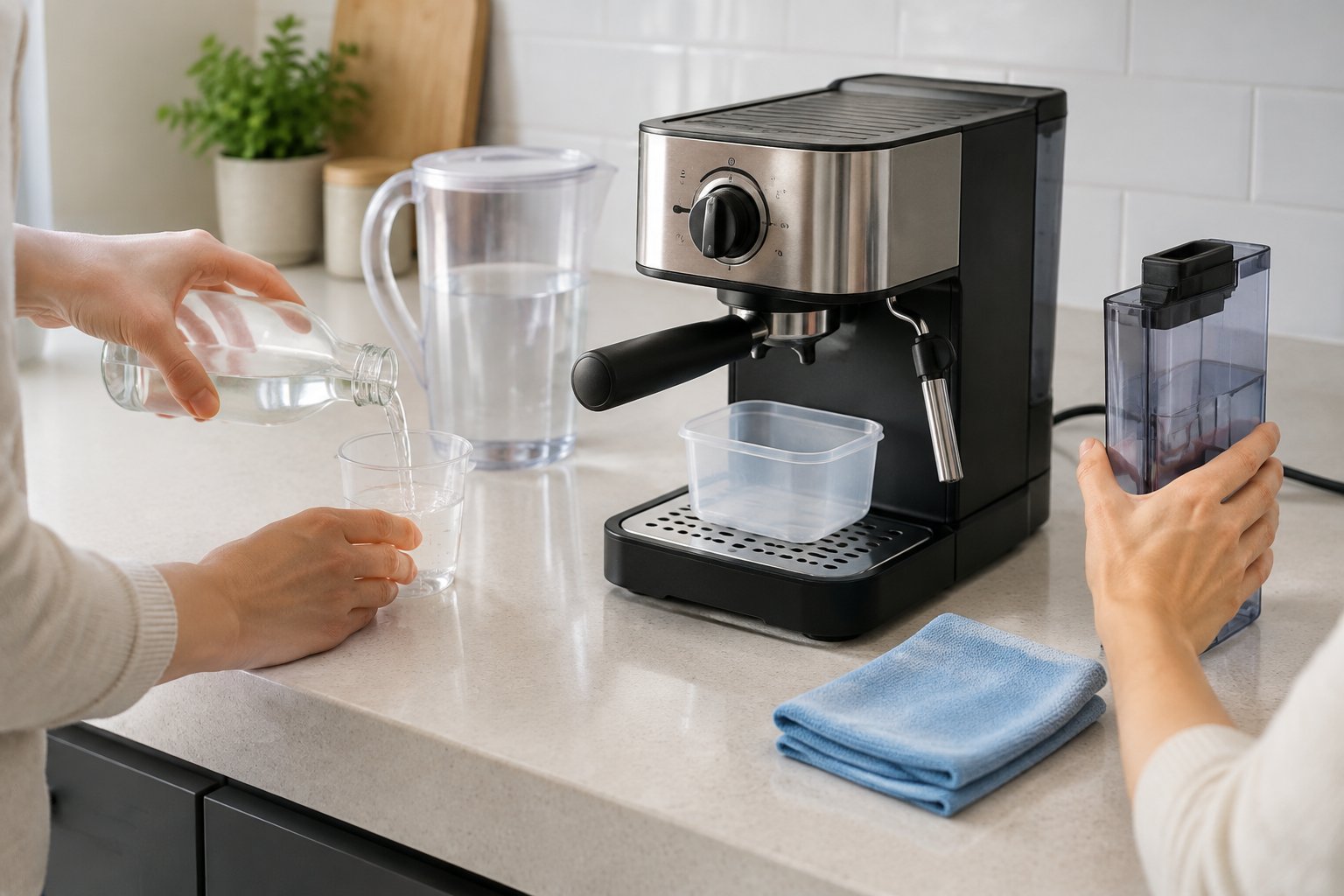
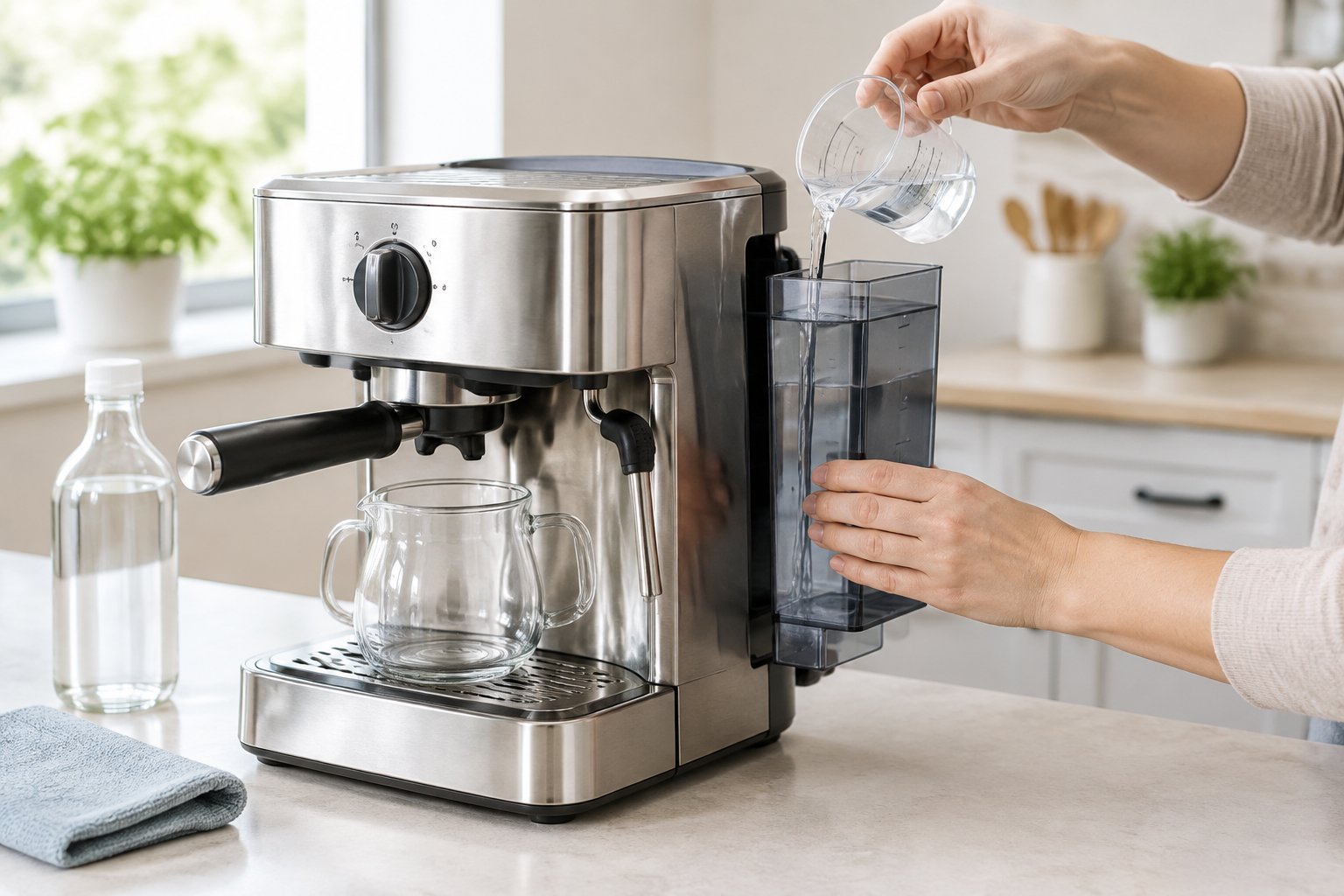
Start with the correct supplies and a cool machine. Read the complete procedure before you begin so you know when to refill the tank or move the collection container.
Gather:
- Manufacturer-approved white distilled vinegar.
- Fresh water that meets the machine’s water requirements.
- A measuring jug.
- A heat-safe container with the capacity specified in the manual.
- A soft cloth and any approved tools for removable parts.
- Your model’s descaling instructions.
Switch the machine off and let hot surfaces cool before handling removable parts. Empty the reservoir and drip tray, then remove used coffee, capsules, or pods as applicable.
Follow the manual’s directions for removing the portafilter, milk accessories, and in-tank filter. Keep a removed filter clean and handle it according to its storage instructions. Use filtered water only if it meets the manufacturer’s requirements, and keep enough available for the full rinse process.
Step 2: Mix the Manufacturer-Approved Vinegar Dilution
Use the vinegar dilution specified for your exact machine and the vinegar strength listed on its label. Do not borrow an equal-parts recipe from a drip brewer or another espresso model.
Use plain white vinegar only when the manufacturer approves that type. Concentrated cleaning vinegar contains a different level of acetic acid and needs separate approval.
- Check the vinegar label against the manufacturer’s required strength.
- Measure the specified amounts of vinegar and water in a clean jug.
- Mix them before filling the reservoir, unless the instructions say otherwise.
- Fill to the required descaling mark without exceeding the maximum level.
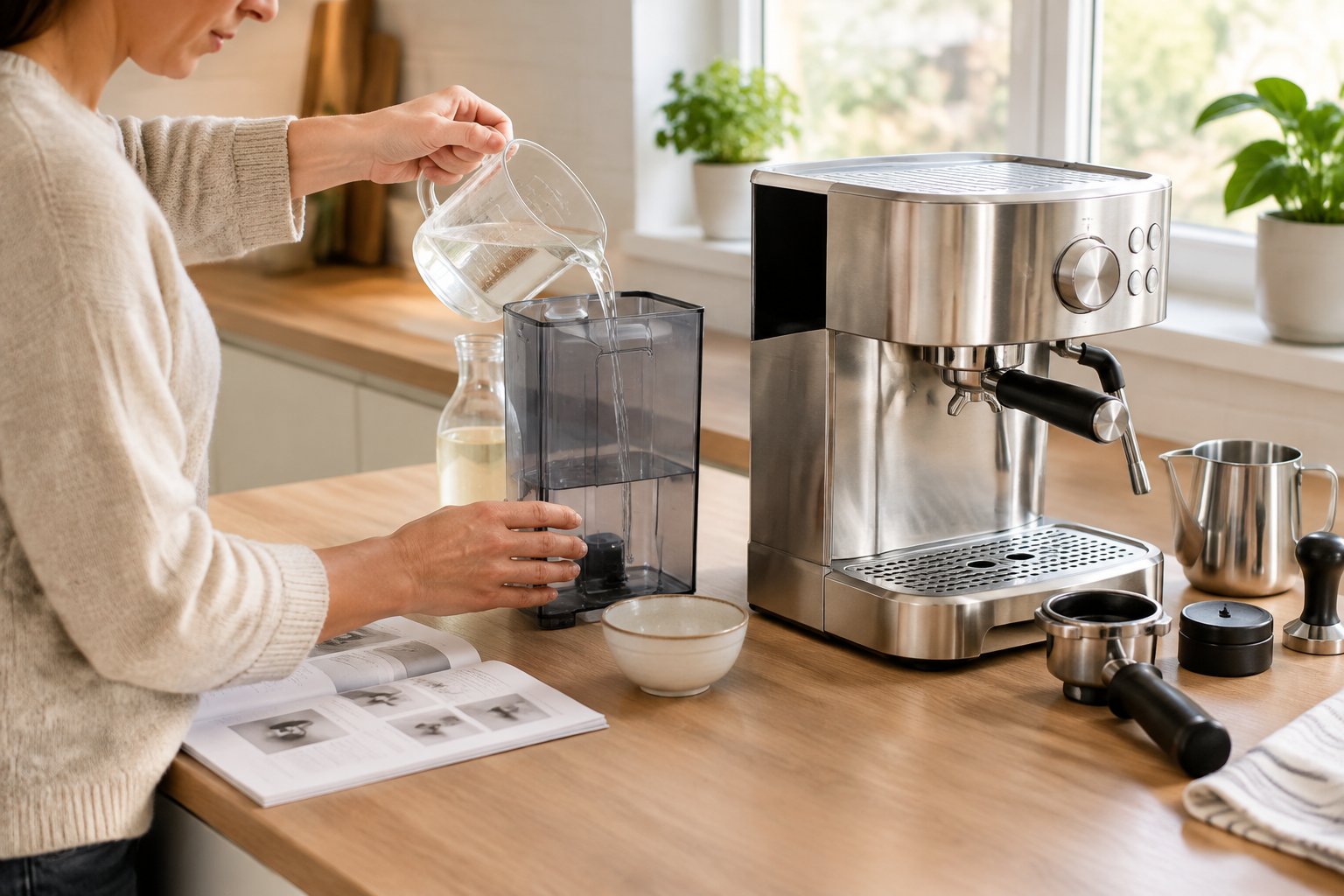
- Seat the reservoir securely.
If support approves vinegar but does not give a dilution, ask for the missing instructions before proceeding. Keep vinegar separate from bleach, cleaning tablets, and every other cleaning chemical.
Step 3: Run the Approved Descaling Cycle
Run the machine’s descaling program or documented manual sequence exactly as directed. Let the procedure control the flow and contact time.
For an automatic espresso machine, select the designated descaling function and follow its prompts. A coffee-oil cleaning cycle serves a different purpose and might route water differently.
- Position the collection container beneath the outlets named in the instructions.
- Start the approved program or manual pumping sequence.
- Operate the hot-water control only when directed.
- Observe each programmed pause without extending it.
- Empty the collection container when prompted, taking care around hot liquid.
For a machine without a descaling program, use only the manufacturer’s stated pumping and resting intervals. Stop before the pump runs dry unless the machine automatically controls the endpoint.
When cleaning an espresso machine with vinegar, do not improvise a steam cycle to move acid through the wand. Use the specified liquid-flushing method, and keep descaling solution out of milk containers and milk hoses unless expressly directed.
Step 4: Rinse the Reservoir and Flush the Water Circuits
Thorough rinsing requires fresh water through every circuit included in the approved procedure. Treat the manufacturer’s rinse requirement as the minimum, even when the vinegar odor disappears earlier.
Empty any remaining solution as instructed, then rinse the reservoir thoroughly. Fill it with fresh, suitable water to the required mark and seat it correctly.
Complete the rinse program or manual flushing sequence. Follow the instructions for the brew outlet and any separate hot-water or steam-boiler circuit. Flushing the group head alone does not prove that every water path is clear.
Keep these checks in mind:
- Refill before the pump draws air.
- Respect the pump’s operating and rest intervals.
- Empty the collection container before it overflows.
- Finish every prompted rinse stage.
Filtered water is appropriate when its mineral content meets your machine’s specifications. If vinegar odor remains after the required rinsing, continue only with permitted water-only flushes. Do not taste discharged descaling liquid or brew coffee to cover the smell.
Step 5: Clean Removable Parts and Reassemble
Removable parts need their own approved cleaning before you put the machine back into service. Let the machine cool again before handling the portafilter or steam-wand components.
Wash compatible baskets, trays, and other washable parts as their instructions specify. Use an approved espresso machine cleaning product for coffee-oil deposits where directed. Clean milk-contact parts using their prescribed milk-cleaning routine.
Inspect accessible rubber seals for cracks, swelling, or displacement. Leave internal seals and fittings to a technician. Avoid soaking rubber, coated parts, or electrical components in vinegar.
Reassemble in the order shown in the manual. Reinstall or replace the water filter as directed, fill the reservoir with suitable brewing water, and run the prescribed water-only check. Confirm normal flow and check for fresh leaks before making coffee.
What if Vinegar Odor, Weak Flow, or Leaks Remain?
Persistent odor calls for approved rinsing, while leaks or severe flow problems call for stopping the machine. Do not repeat acid treatments until the cause is clear.
| Symptom | Appropriate next action |
|---|---|
| Vinegar odor | Rinse the reservoir again and complete permitted water-only flushes. |
| Weak flow | Check the tank seating and accessible screens once the machine has cooled. |
| No flow or a strained pump | Stop operation and follow the manual’s troubleshooting procedure. |
| Fresh leaks | Switch off and arrange inspection before further use. |
| Descale light remains on | Check whether all rinse stages and completion prompts were finished. |
Weak flow has several possible causes, including trapped air, loosened scale, or a blocked screen. Follow the model’s priming instructions if it draws air.
For leaks near rubber seals or beneath the housing, let the machine cool and seek service. If water is near the plug or outlet, avoid touching wet electrical equipment and isolate power safely. Adding stronger white vinegar risks worsening an unresolved fault.
How Often Should You Descale Your Machine?
Follow your manufacturer’s maintenance interval and configure its water-hardness setting where available. Base scheduling on measured water hardness and usage, within the limits set by the machine’s instructions.
Hard water leaves more scale-forming minerals in the heating system. Test the water you pour into the tank, including water treated by a filter pitcher. Many taste-and-odor filters leave hardness minerals in the water.
For a practical maintenance record:
- Record your water-hardness result.
- Enter that result into the machine’s settings if supported.
- Note each completed descaling cycle.
- Follow the prescribed filter replacement schedule.
Keep daily espresso machine cleaning on a separate schedule. Emptying grounds and cleaning milk-contact parts remain necessary between descaling sessions. If performance declines before the next scheduled descale, check routine cleaning and troubleshooting instructions before assuming mineral buildup is responsible.
When Is a Dedicated Descaler the Better Choice?
A manufacturer-approved commercial descaler is the better choice whenever vinegar lacks explicit approval or the manual specifies a dedicated product. It provides a defined dose and procedure matched to the equipment.
Choose the exact recommended formulation or an alternative the manufacturer confirms as compatible. Descaling tablets and liquid products require their own dosing instructions. Equal package sizes do not establish equal strength.
For an automatic espresso machine, check that the product suits the built-in program. Also confirm whether a tablet is intended for mineral removal or coffee-oil cleaning before placing it anywhere in the machine.
If you are buying a replacement machine, consider maintenance requirements as a purchase consideration. Access to approved supplies and clear cleaning instructions affects the work required throughout ownership.
A machine with severe scale or a history of neglected maintenance needs professional advice before another chemical treatment. Ask whether service descaling is required, especially for equipment with large or separate boilers.
Protect Your Machine with Approved Descaling and Thorough Rinsing
Use vinegar only with explicit model-specific approval and complete instructions. Measure the prescribed solution, follow the cycle without adding extra soaking time, and finish all rinse stages.
To clean an espresso machine fully, keep mineral removal separate from coffee-oil and milk cleaning. When vinegar is excluded, use the approved commercial descaler; if leaks or flow problems remain, stop and arrange service before brewing again.
Frequently Asked Questions
Use the approved procedure to resolve product substitutions and maintenance questions. Get model-specific confirmation whenever a proposed change affects the chemical or cycle.
Can you use apple cider vinegar or flavored vinegar?
Use only the vinegar type explicitly permitted by the manufacturer. Approval for white distilled vinegar does not extend to colored or flavored products, which introduce other ingredients into the water system.
Should you add baking soda to white vinegar?
Keep baking soda out of the vinegar solution. It neutralizes the acid needed for descaling and produces foaming that complicates the process.
Are cleaning tablets and descaling tablets interchangeable?
Treat cleaning tablets and descaling tablets as separate products unless their labeling explicitly establishes otherwise. Coffee-oil cleaners and mineral-removing products have different jobs, so use each only in its designated location and cycle.
Does using vinegar automatically void the warranty?
Check the written warranty and maintenance terms for your exact model. Warranty consequences depend on those terms and the cause of a fault, so keep written manufacturer approval before using vinegar instead of a specified commercial descaler.
Ashley Wells

Your trusted source for product reviews, decor inspiration, and expert tips. Ashley Wells helps you make informed choices and elevate your lifestyle. Discover the best products and decor solutions for your home. Follow Ashley Wells for the latest reviews and trends. Create your ultimate living spaces with her.