
To choose the best dining room furniture for your home, measure the usable space, plan seating for your daily household, and check the table and chairs together before committing to either. Give yourself room to pull out chairs and move around occupied seats, then choose finishes whose upkeep fits your routine.
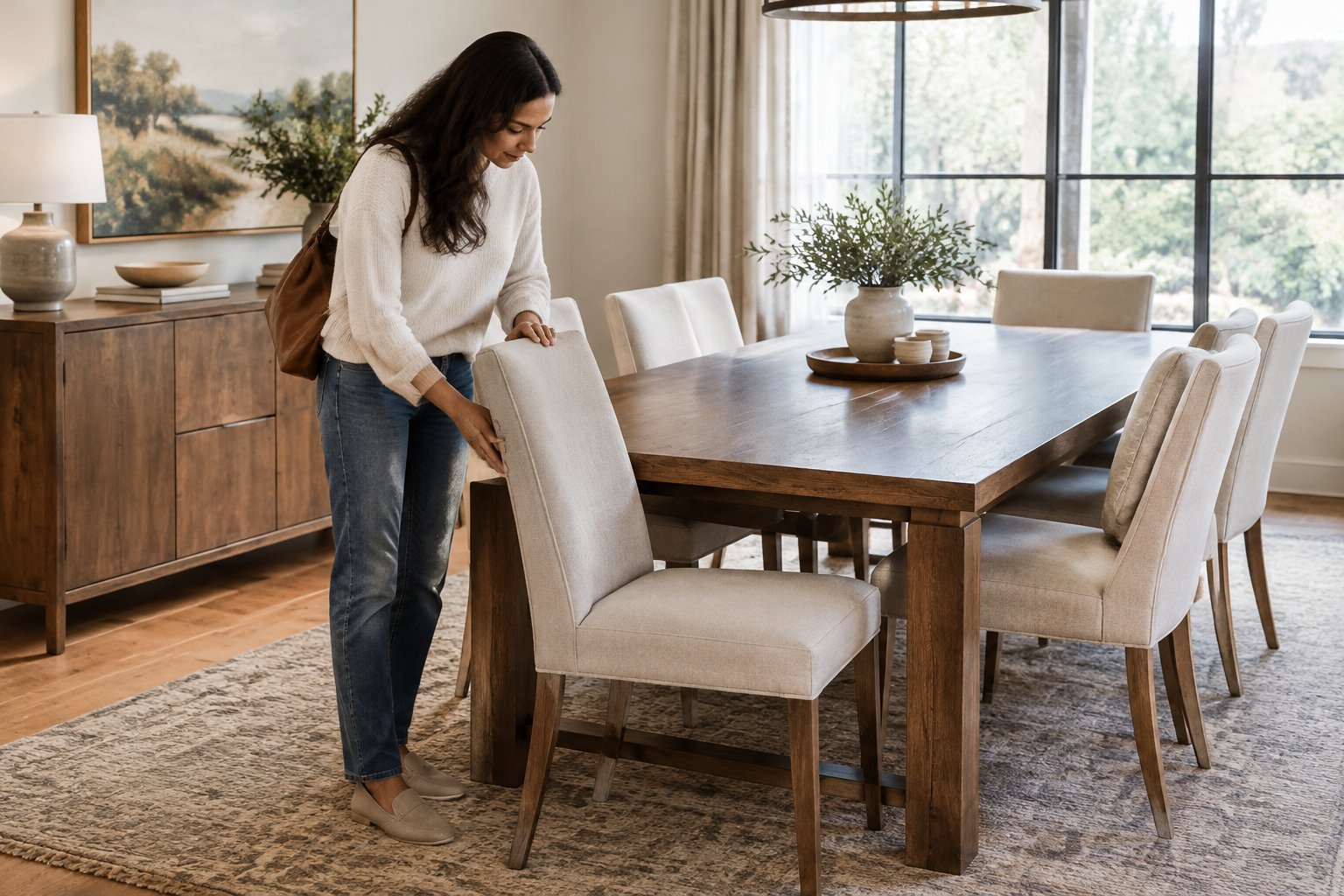
Your dining room furniture needs to work during ordinary meals as well as gatherings. A table that fits with chairs tucked in still needs space when everyone sits down. Start with those working dimensions, and you’ll have a clearer basis for comparing styles and deciding where to spend.
Measure Your Dining Room and Plan for Everyday Seating
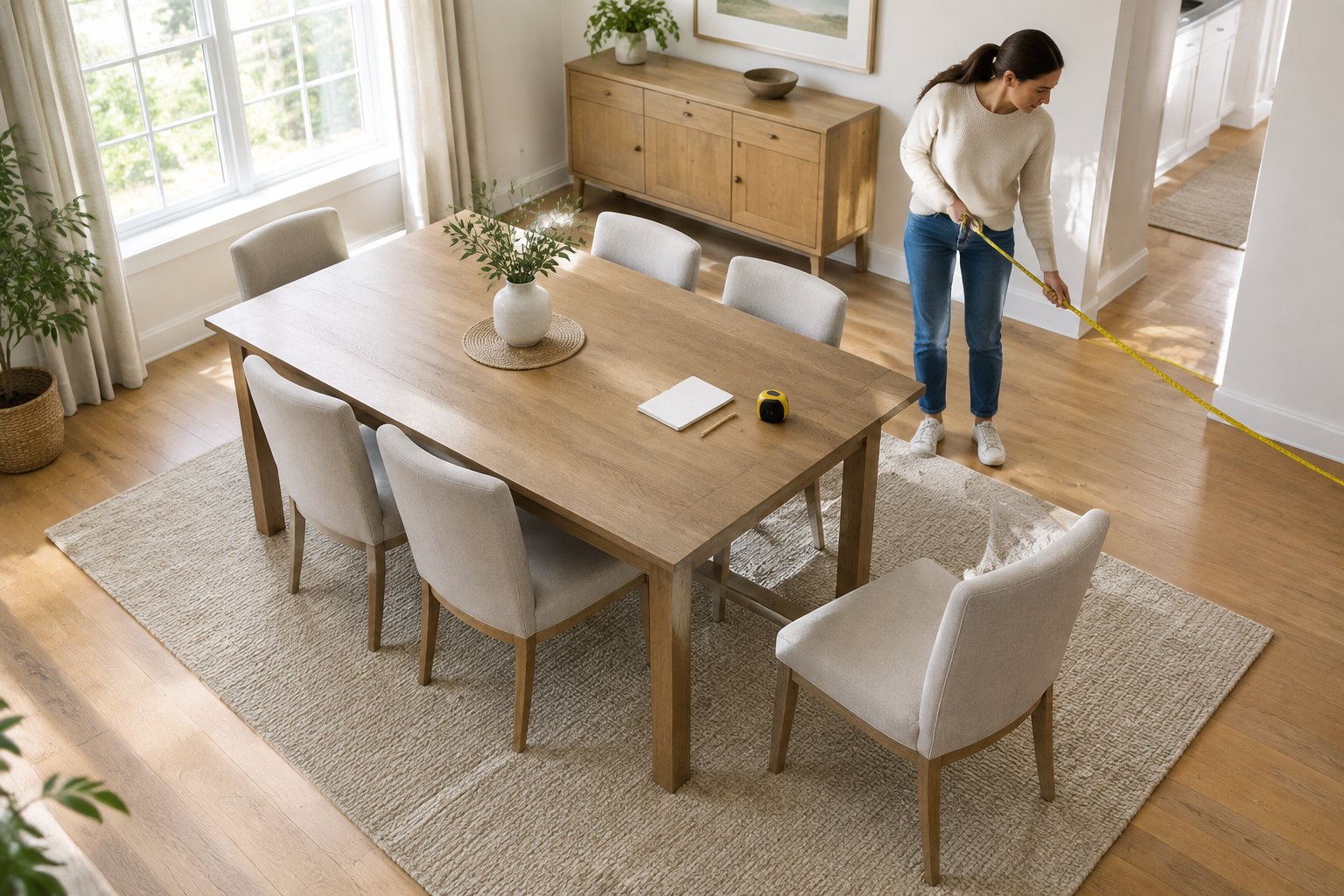
Plan your dining room around occupied chairs and clear walking routes. Begin by measuring the usable floor area, including the space taken up by existing storage.
Use 36 inches between the table edge and a wall or other furniture as a common baseline. Allow more along busy routes, especially where someone needs to pass behind a seated person. Your chair depth and household’s mobility needs should shape the final layout.
Make your measurements useful with these checks:
- Mark the footprint. Use painter’s tape to outline the table and any planned storage.
- Test seating in use. Position an existing chair at the outline, sit down, and check the route behind it.
- Allow for extensions. Mark the table’s fully extended size and leave access to nearby doors.
- Count everyday seats. Base your normal layout on regular use, then plan how occasional guests will fit.
When planning your room layout, include door swings and access to adjacent spaces. Your dining furniture also needs a delivery route: measure entrances, hallway turns, stairs, and elevators against the furniture’s dimensions. Check whether legs or bases arrive attached, since that changes what must pass through the doorway.
Which Dining Table Shape, Size, and Material Fits Your Needs?
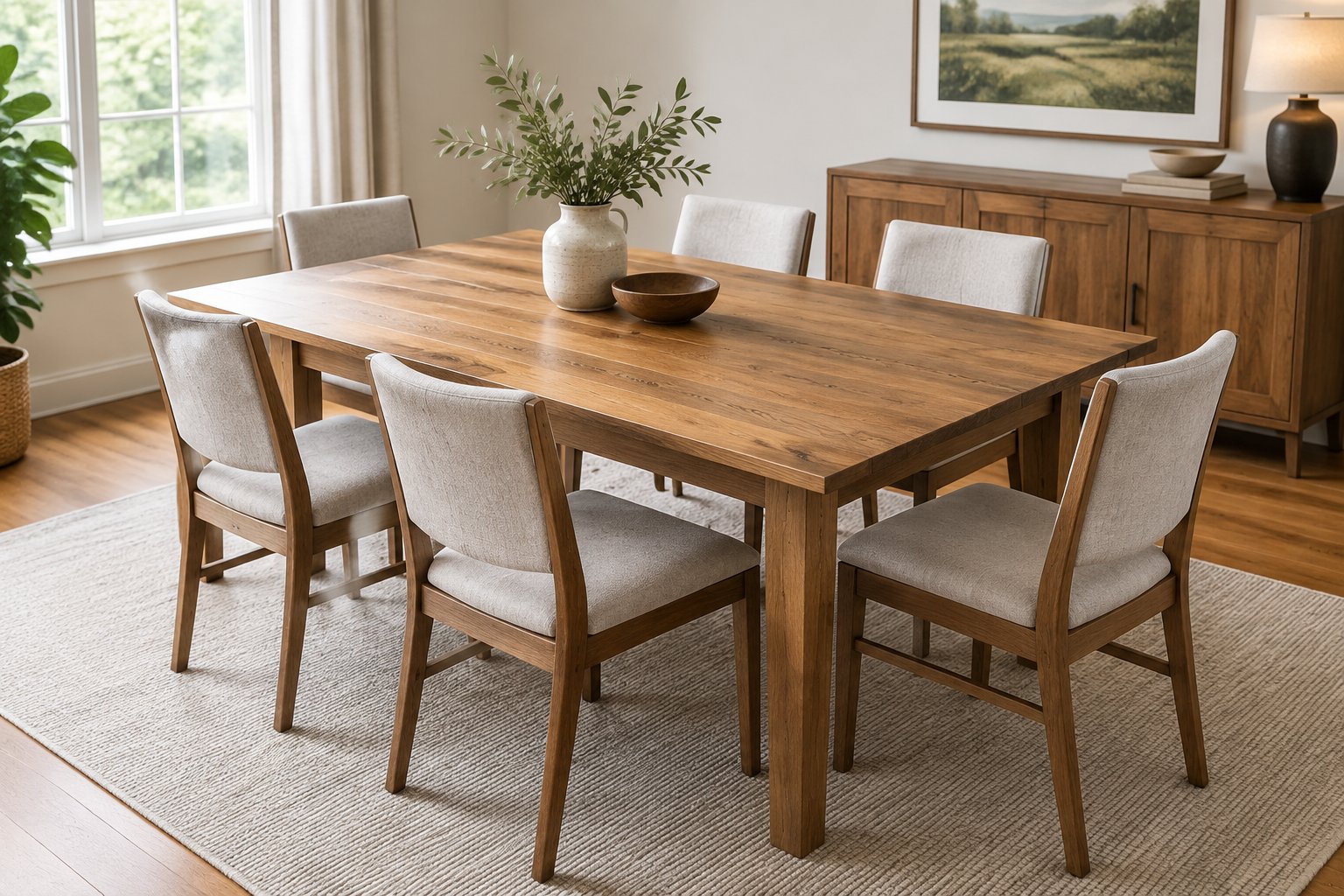
Choose your dining table’s shape to suit the room’s proportions, then compare materials by finish and upkeep.
- Rectangular: Use the length in a long room, while checking access around the end seats.
- Round: Consider this for a compact or square area where rounded edges help circulation.
- Oval: Keep a long seating surface with softer corners, but test the narrower ends with place settings.
- Square: Match a square dining area, checking that the tabletop remains easy to reach across.
Allow roughly 24 to 30 inches of table edge per person as a planning range. Check the space between the legs, too. A wide tabletop with closely spaced legs leaves less usable seating space; a pedestal base requires a foot room check.
For materials, focus on the surface you will maintain. With solid wood, ask whether the finish permits future refinishing. With veneer, inspect the edges and follow the care instructions, since aggressive sanding risks cutting through the surface.
Choose glass if you like an open view through the room and accept visible fingerprints. For marble, account for staining and damage from acidic spills. With laminate, inspect edge seams and follow heat-protection instructions.
For extendable dining tables, operate the mechanism and check where removable leaves will be stored. Test stability with the table fully open.
Choose Dining Room Chairs for Comfort, Fit, and Coordinated Style
Evaluate your dining room at the table height you intend to use. A chair that feels comfortable on its own still needs enough clearance beneath the tabletop and any supporting apron.
Sit back with your feet supported and notice whether the seat edge presses behind your knees. Lean toward the table as you would during a meal. Check that the back supports you without forcing an awkward posture.
Before settling on a dining chair, check:
- Arm clearance: Measure the arms against the table’s underside, including the apron.
- Seat spacing: Include the chair’s full width when placing seats between table legs.
- Pull-out space: Test how far you need to move the chair to stand comfortably.
- Handling: Lift and slide it to judge whether its weight suits daily use.
For upholstery, match the care requirements to your household. Inspect seams where crumbs collect, and check whether removable covers are washable under the manufacturer’s instructions. A fabric labeled “performance” still needs specific cleaning guidance.
You have room to mix styles. Repeat a finish tone or a curved detail to connect the pieces. Keep comfort checks consistent across every chair style, particularly if you combine upholstered end chairs with slimmer side chairs.
Add Useful Storage Without Overcrowding or Overspending
Add storage only after your table-and-chair layout works and your budget covers those essential pieces. Choose capacity around the items you need to keep near the dining area.
Treat sideboards and buffets as overlapping labels. Compare actual dimensions and interiors; the product name alone gives you little help with fit.
Measure your largest serving pieces before comparing cabinets. Look for shelf spacing that suits your dishes and drawers that accommodate linens without tight folding. If you plan to serve food on top, check the finish’s care instructions and allow for protective mats.
Test the storage footprint in use:
- Open doors and drawers fully without moving occupied chairs.
- Leave access to nearby outlets and wall controls.
- Check that handles stay clear of the main walking route.
- Follow any supplied anchoring instructions, with suitable installation permission if you rent.
Inspect drawer movement and door alignment when viewing a piece in person. Uneven gaps or sticking drawers deserve attention before delivery.
If your existing kitchen storage handles your dinnerware, leave extra dining room furniture out of the first purchase. You’ll preserve circulation space and keep more of your budget available for supportive chairs and a well-built table.
Buy for Daily Comfort and Long-Term Value
Your strongest choice is a table-and-chair combination that fits your occupied layout and suits the care you’re willing to give it. Keep your measurements beside you when comparing dining furniture, including the extended table footprint and delivery route.
Give your budget to the pieces you use at every meal. Check chair comfort, base clearance, and finish care before adding optional storage. Before placing an order, review the full cost, assembly arrangements, and return terms so the purchase matches your plan.
Frequently Asked Questions
Choose finishing touches that support how you use your dining room. Keep access and everyday cleaning in mind as you complete the space.
Do you need a rug under your dining table?
You can furnish a complete dining area without a rug. If you add one, choose a size that keeps chair legs on the rug when you pull out your dining chairs, and select a surface that suits frequent crumb cleanup.
Is a Dining Room Bench Practical for Everyday Seating?
A dining bench suits your household if everyone using it is comfortable getting in and out of a shared seat. Check access at both ends, especially with a trestle-base dining table, and consider how easily someone seated in the middle will leave.
How do you protect the floor beneath dining chairs?
Fit floor protectors that suit both your chair legs and your flooring manufacturer’s care guidance. Keep them clean and replace worn pads, since trapped grit scratches the floor as you move your chairs.
